
Residential real estate markets
across
Pent-up demand,
population growth, tight inventory levels, and the longest economic
expansion since World War II collectively fueled one of the best
decades on record for residential real estate in
Decade
in Review 1997 - 2007 found that major housing centres across the
country experienced strong consecutive growth between 1997 and 2007.
Average price spiraled upward while unit sales climbed in tandem as
more and more Canadians bought into homeownership.
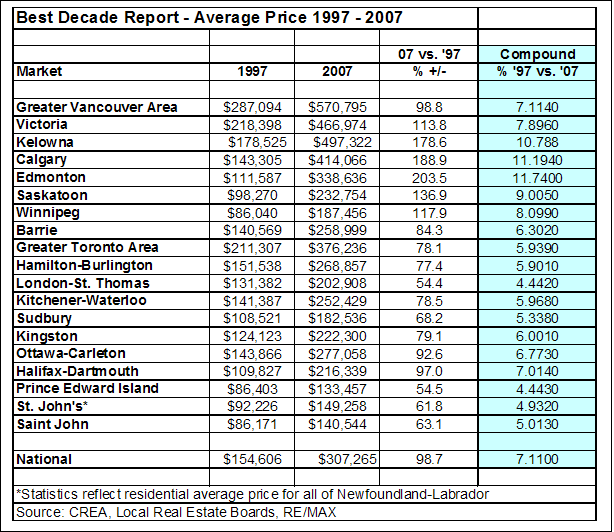
Nationally, average price almost doubled in the 10-year
period, rising from $154,606 in 1997 to $307,265 in 2007, for a 7.1
per cent annually compounded rate of return.
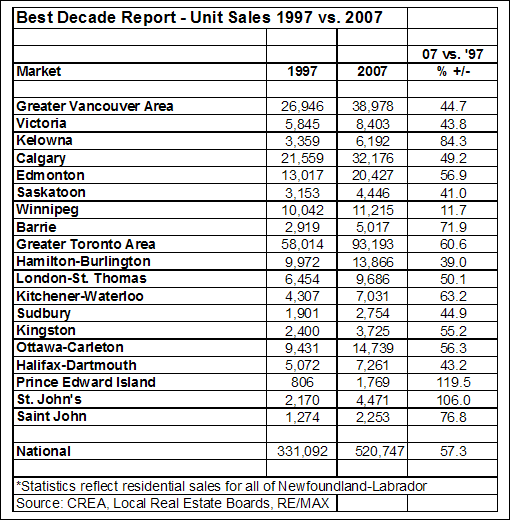
Home sales across the country increased just over 57 per cent
from 331,092 units in 1997 to more than half a million sales last
year.
Immigration and
in-migration have played a serious role in jumpstarting residential
housing markets, particularly in
Percentage
increases in home sales varied across the country, with

In 2006,
homeownership rates in the country were the highest on record at
68.4 per cent.
Population growth has contributed to heated market conditions –
especially in
The
non-cyclical nature of the decade comes as some surprise.
Never before have we seen such a continuous run up in
Canadian real estate.
Clearly, strength in all markets has been directly linked to solid
growth in local, provincial and national economies.
Low interest rates, job security, and consumer confidence
have all served to further bolster home-buying activity across the
nation.
Robust economic
performance in
As demand for
housing increased across the country, the supply of homes listed for
sale began to contract.
Multiple offers were commonplace in many areas, some with
sales-to-listings ratios as tight as 80 to 90 per cent.
Nationally, 1997 marked the first year since 1988 that the
sales-to-listings ratio hit 50 per cent.
The sales-to-listings ratio would remain above 60 per cent
from 2001 onward – rising to as high as 68 per cent in 2002.
The decade was
not without its obstacles – the high-tech meltdown, a US recession,
9/11, SARS, Mad Cow, a blackout that affected the entire
Northeastern seaboard, natural disasters such as ice storms,
hurricanes, and forest fires and more recently, the credit crunch
south of the border.
Given the continuation of sound economic fundamentals, it’s
expected that residential real estate markets across the country
will continue to experience healthy activity, albeit at a more
moderate pace.